Art Basel, My Ass
When I was in art school, people of my age outside of the art world hardly paid any attention to art. However, just as one eventually graduates from cheap beer to vintage wine, a sudden, widespread interest in Fine Arts begins to appear. However, this demographic does not wish to make art; they only wish to consume it (even though the bar to make art is much lower than collecting it), mainly because producing art requires vulnerability, whereas consuming it today is perfectly safe.
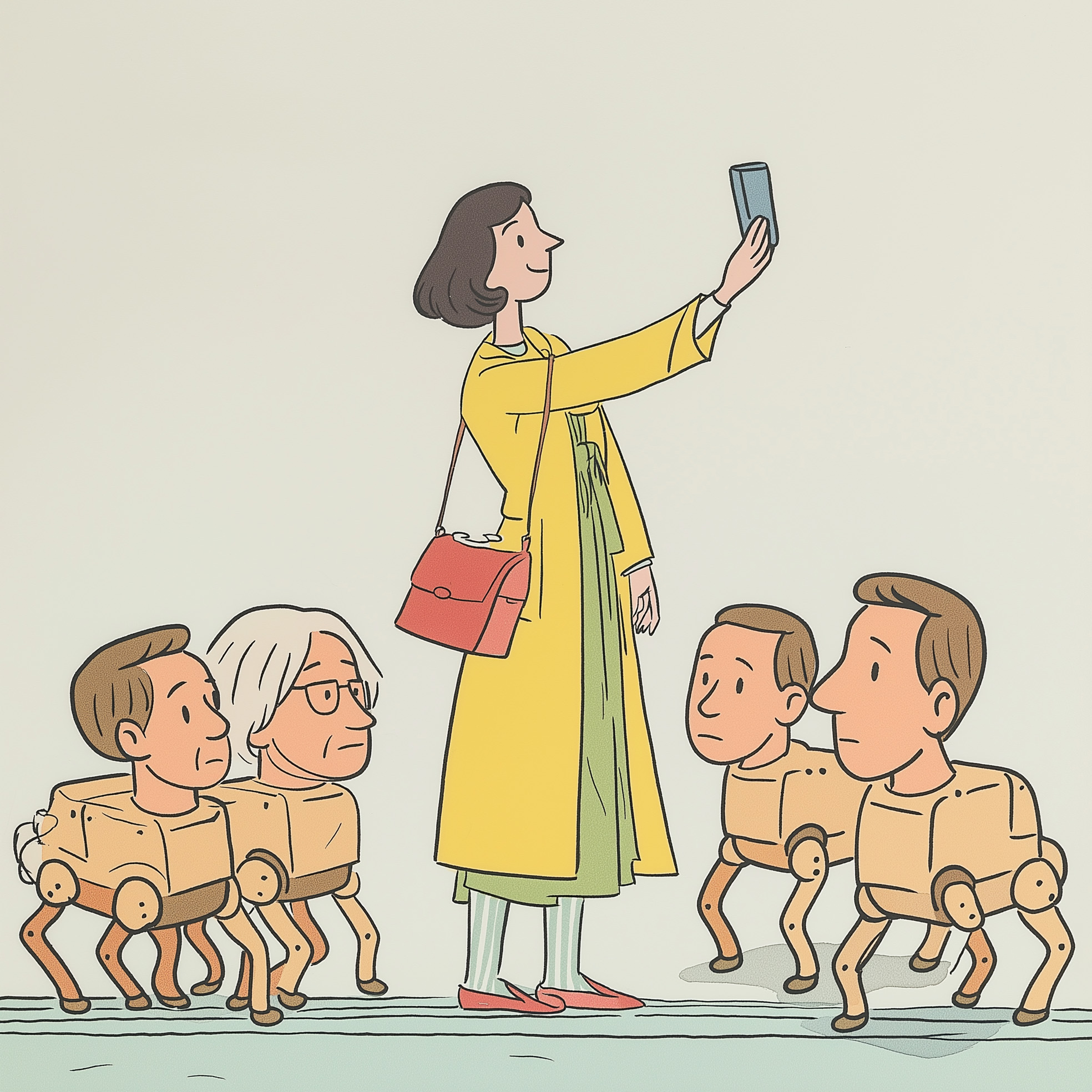
This shift, while rooted in historical class behaviors, has been accelerated by social media. The convergence of digital technology and middle-aged status anxiety has fundamentally altered not just how art is viewed, but how it is made, sold, and understood. We are witnessing the industrialization of the art world to service a mass demand for cultural capital.
Historically, acquiring cultural capital was a slow, effort-intensive process. What differentiated art from entertainment was that the latter required no effort at all. If you don’t immediately get it by kicking back on a couch, it was the creators’ fault. Fine art, on the other hand, demanded that the audience meet halfway. To signal sophistication, one had to study art history, visit obscure galleries, and participate in risky critical debates.
Social media has removed this friction. Today, cultural capital is subject to brutal efficiency. The modern audience, seeking the highest return on investment for their status signaling, asks a simple economic question: Why struggle to understand difficult art when accessible art yields the same social reward?
The industrialization of the art world has necessitated the rise of instant aesthetics. Because the modern viewer, scrolling through a feed, will not dedicate twenty minutes to decode a complex work, art that requires patience effectively becomes invisible. In its place, the market has pivoted toward a thumbnail aesthetic.
However, this visual accessibility is often shielded by a conceptual double pretense. These artists frequently frame their hyper-commercialized output as an ironic critique of consumer culture, which serves as a convenient intellectual alibi. This narrative allows them to operate as luxury brands while retaining the prestige of serious “critical” artists. By claiming to parody the shallow nature of the market, they are able to enthusiastically participate in it, using the rhetoric of anti-consumerism to justify their status as the ultimate consumer products.
Perhaps the most profound shift lies in how the audience interprets art. In the past, abstract or conceptual art presented an interpretive risk. Standing before a complex work, the viewer risked looking foolish if they failed to grasp its aesthetic nuance. To mitigate this risk, contemporary audiences, and the artists catering to them, have adopted identity politics as an easy access point, providing a clear and safe manual for interpretation. It shifts the viewer’s task from aesthetic judgment (which is subjective therefore risky) to moral judgment (which is binary and safe). If you stood before a Jackson Pollock in 1955 and said, “I like this,” you risked looking like a fool, especially if you couldn’t articulate why the drips mattered. If you stand before a portrait of a marginalized subject today and say, “I like this,” you are not making a subjective aesthetic statement; you are making a universally moral one. You are signaling a familiar, accepted, safe virtue.
When art creates a clear moral hierarchy based on identity, the viewer no longer needs to worry about whether the work is “good” or “bad”; they only need to show that they are on the “right side” of the message. This transforms art consumption from a subjective challenge into a team sport, offering a secure, accessible path to cultural prestige.
This democratization of access has spawned a new market tier: the Instagram Collector. Priced out of the blue-chip market, these individuals engage in a classic psychological defense mechanism: reaction formation. While they fundamentally desire the status of the elite collector, they try to mask this envy by championing “affordable art” and loudly condemning the expensive market as elitist. Yet this stance is transparently performative and hypocritical. They replicate the very hierarchy they claim to reject, using their collections to assert status over their own followers who cannot afford art at all. They rely on the same structure of cultural capital as the blue-chip elite; they are simply operating on a lower rung of the ladder.
Consequently, the art world feels entirely co-opted by cultural capitalists of all levels. Once the professional class achieves financial security, their appetite shifts toward cultural distinction. Unlike financial capital, which provides utility whether or not anyone knows you have a billion dollars in the bank, cultural capital must be signaled to function; the audience requires an audience. Instagram has become the essential engine for this operation. By broadcasting their presence at high-brow institutions like MoMA, the Met, Carnegie Hall, or Art Basel, individuals can efficiently harvest prestige with minimal financial outlay. Social media has effectively created an entry-level tier of cultural capital that did not exist before.
I am uncertain where this trajectory ends, but the current landscape bears little resemblance to the art world I experienced in the 1980s and 90s. That era was defined by conceptual ambiguity and critical inquiry; it was about raising relevant questions rather than offering easy answers. Today, that intellectual nuance appears to have been replaced by a demand for moral certainty. The market now favors didactic work that tells the audience what to think, removing the risk of subjective interpretation to maximize shareability. While there are undoubtedly artists still engaged in the open-ended cultural discourse of the past, they are increasingly difficult to locate, buried beneath an algorithm that punishes nuance and rewards the immediate, accessible answer.
Subscribe
I will email you when I post a new article.